
The state of UK eCommerce: The rise of the online marketplace

30% of shoppers in the UK are most likely to buy from online marketplaces, compared to 6% buying from a brand’s own website.
Even large, established brands like Crocs, LEGO, and Wonderskin sell on platforms like Amazon, alongside their own online stores.
But why are marketplaces so popular with both brands and customers?
As part of our series investigating modern eCommerce trends, we’re taking a look at the rise of marketplaces in the UK. What makes shoppers want to buy from them, and what makes businesses want to sell on them?
Article topics
- Why customers love marketplaces
- Marketplaces make everything available in one place
- Marketplaces take the stress out of buying
- Marketplaces are (generally) trustworthy and reliable
- Why businesses love marketplaces
- Business can tap into a ready-made audience
- Marketplaces can handle everything
Why customers love marketplaces
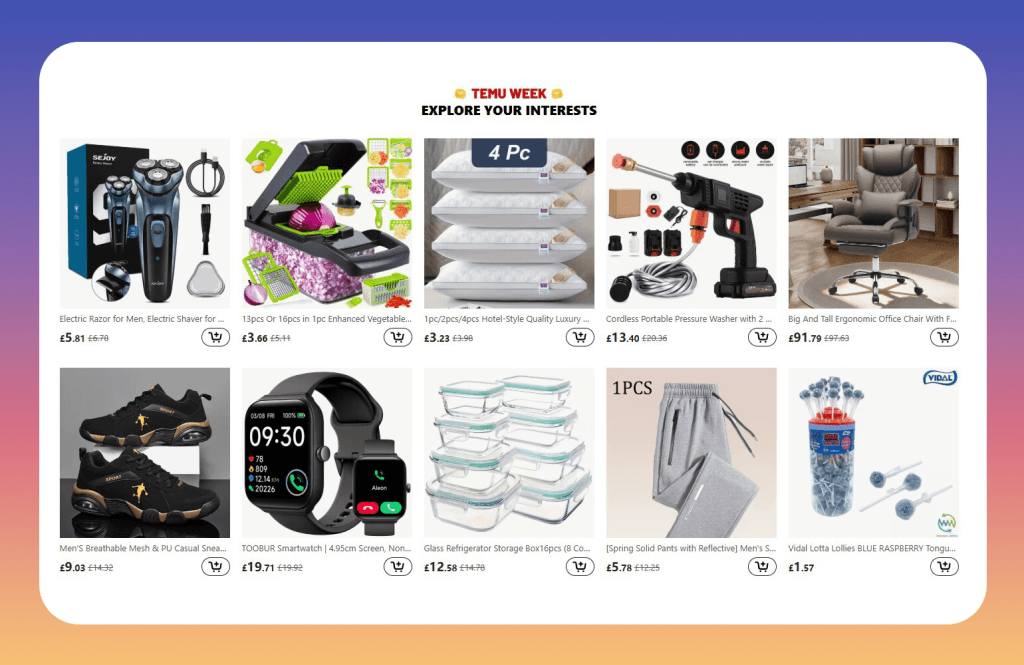
There are hundreds of marketplaces operating in the UK, with Amazon, eBay, Etsy, and Temu amongst the most popular. In fact, Amazon saw a staggering £32 billion of sales in the UK in 2025!
Here are just some of the reasons why shoppers opt to buy from marketplaces.
Marketplaces make everything available in one place
Marketplaces are the equivalent of a supermarket or hypermarket – you can buy anything from them!
Platforms like Amazon, eBay, and international marketplaces like Alibaba and Walmart provide convenience for shoppers. They only have to place one order, pay one delivery fee, and they receive everything at the same time.
For many people, marketplaces are the easy way to buy, with around half of UK adults purchasing from marketplaces at least once a month.
Marketplaces take the stress out of buying
Buying a product online, especially something large or expensive, can be a chore. You may need to visit multiple stores, read multiple specifications, and find as many customer reviews as possible.
Marketplaces invest significant time and money into marketing, SEO, and usability. This means they are not only easy to find in the search engine results, but their websites are simple to use and buy from.

Marketplaces place significant value on online reviews, with systems in place to encourage customers to leave as much detailed feedback as possible. Many platforms also provide AI overviews to provide a short summary to customers who are short on time.
If you’re an online business, it’s important to consider agentic commerce and how it will affect customers. Agentic commerce is when AI agents research, compare, and buy products on behalf of shoppers. Marketplaces are investing a lot of resources into agentic commerce to make buying as easy and friction-free as possible.

For example, Alexa for Shopping, Amazon’s AI assistant, can search for products and automatically add them to shoppers’ baskets. The technology launched in the US in May 2026 and is likely to become available in the UK soon.
Find out more about our eCommerce predictions for 2026
Marketplaces are (generally) trustworthy and reliable
When you’re buying online, there’s the risk that the website you use may be unreliable or even malicious.
Between 0.6% and 3.5% of people across Europe are victims of online fraud each year, with around 90% of these cases concerning the purchasing of goods and services online.
Marketplaces are designed to be as trustworthy as possible, encouraging customers to buy from them. Platforms offer a variety of well-known payment processors, as well as clear, transparent returns processes.

Many marketplaces allow customers to return products using self-serve portals, meaning they can sort out a return without waiting to speak to a person.
Find out more about trust signals in eCommerce
Marketplaces also offer reliable, fast delivery, often making the most of the latest technology to provide a high-quality service to customers. In May 2026, Amazon became the first retailer in the UK to deliver parcels by drone, trialling the service in Darlington, County Durham.
However, it’s important to note that marketplaces aren’t 100% safe.
With such a wide range of products on offer from different businesses, there is the risk that customers can buy counterfeit or unsafe products, especially from overseas. According to a survey by GOV.UK, only a third of shoppers take product safety into consideration when buying from marketplaces.
The UK Government is currently in the process of creating an updated product safety framework, and marketplaces are taking measures to take down questionable listings. For example, algorithms that proactively scan listings for suspicious information, like photos copied from other websites.
Why businesses love marketplaces
67% of sellers are active on at least four different marketplaces. This means selling through a marketplace isn’t a matter of trial-and-error and seeing what sticks – it’s an intentional strategy
Here are just some of the reasons why businesses can benefit from selling on a marketplace.
There’s an increasing number of marketplace websites to choose from

At the turn of the century, there were only a handful of marketplace websites in the UK – Amazon and eBay, as well as a few smaller buy and sell sites like Gumtree and Freeads.
In 2026, there’s a lot more variety. While it’s not possible to pinpoint the exact number of marketplaces available today, there’s a marketplace to suit every niche.
There are two key types of marketplace – horizontal and vertical.
- Horizontal marketplaces, like Amazon and eBay, sell a wide range of unrelated products
- Vertical marketplaces, like Etsy and Not on the High Street, sell a smaller range of niche products
As a rule of thumb, horizontal marketplaces have a wider reach, but with vertical marketplaces, it’s easier to get customers to convert.
A wide range of marketplaces makes it easier for businesses to find the website that’s right for them, and new marketplaces are popping up all the time.

Only recently, Joybuy, an online retail platform owned by China’s largest retailer, JD.com, opened up a marketplace for UK businesses. The platform offers a ‘Double 11’ delivery service, where products ordered by 11am arrive by 11pm the same day.
Business can tap into a ready-made audience
When you launch an eCommerce store, you need to spend time, money, and resources encouraging customers to visit and buy.
Marketplaces give you immediate access to a large audience that is potentially ready to purchase your products.
It’s important to note that there is a lot of competition, and the marketplace owns the customer data, making it harder to build a relationship with them. But marketplaces can be ideal if you need to sell to customers quickly or sell to new markets.
Marketplaces can handle everything
When you run an eCommerce store, there’s a lot you need to deal with. You need to manage inventory, send products out to customers, and handle returns.
Some marketplaces can handle the day-to-day logistics for you, saving you time. This is ideal if you’re running a business as a side hustle, selling internationally, or just want to prioritise your own eCommerce store.
Amazon and TikTok Shop offer a ‘fulfilled by…’ service, and eBay provides fulfilment services through third-party provider Orange Connex.
However…
While marketplaces have their advantages, they also have their disadvantages.
The key problem for businesses is that it’s significantly harder to foster loyalty with customers. 75% of marketplace shoppers say price is the most important factor for them, meaning marketplaces can often be ‘a race to the bottom’.
If a competitor lowers their prices, it could mean fewer sales for your business.
Another issue is that selling on a marketplace leads to a loss of control. You’re bound by the branding and rules of the online platform, and a change in policy could put you at a significant disadvantage.
Many platforms now use artificial intelligence to identify and flag issues. This means some businesses have found their accounts have been restricted by AI, and they can’t get in touch with a human to put things right.
Our opinion? Marketplaces have their uses – you can use them to test the waters and see if your product will sell, or to try to appeal to customers who are ready to buy right now.
But marketplaces are at their best when you use them alongside an eCommerce site. This allows you to target customers no matter where they are in the sales funnel, showcase your expertise and experience, and have full control over your branding.
Many eCommerce platforms offer extensions and plugins that allow you to sync your marketplace store with your website for complete peace of mind.
Discover some of the best Shopify and WooCommerce extensions and apps
Xigen: Your eCommerce specialist
The number of marketplaces in the UK is on the rise, led by customers’ needs to find products quickly and in one place. Over the past year or so, we’ve seen many different marketplaces appear, including Tesco, TikTok Shop, and Joybuy.
If you’re considering getting started on a marketplace, it’s vital to find the right one for you. Unless you sell a very wide range of products, a vertical marketplace is usually the best option, and it’s vital to take fees, rules, and your target audience into consideration.
And of course, combine your marketplace presence with a fully-functional eCommerce store to see the best chance of success – we can build an online store that shoppers will love. Get in touch with us today to find out more.
We hope you enjoyed this look at UK eCommerce marketplace trends in 2026. Why not check out the rest of the articles so far in this series?


 Back
Back