
Cross-selling vs upselling: Everything you need to know

Have you ever gone to the supermarket to do your weekly shop and been tempted by a bright, engaging display of all your favourite foods?
Getting customers to buy products they weren’t expecting to initially buy can be a smart marketing strategy. If you run an online store, you can entice customers into filling their shopping carts with cross-selling and upselling!
In this article we’ll take a look at the difference between cross-selling and upselling, and the places you can use them in your eCommerce store.
We’ll also share our top tips to help you make the most out of cross-sells and upsell deals!
Article topics
- What is a cross-sell?
- What is an upsell?
- What are the benefits of cross-selling and upselling?
- Where can you use cross-selling and upselling on your eCommerce site?
- How to cross-sell and upsell like a pro
- Cross-selling and upselling: Frequently asked questions
What is a cross-sell?

A cross-sell is when you attempt to sell additional products to customers, based on the products in their shopping cart.
In the example above, a customer has put a soft toy in their shopping cart, so IKEA has recommended some different soft toys they may be interested in buying too.
What is an upsell?

An upsell is when you attempt to sell an upgraded, premium, or larger version of a product to customers, often at a discounted price.
In the example above, a customer put a licence to access a royalty-free stock photo archive in their shopping cart, so AppSumo has recommended that they buy two additional licenses.
Another example could be that a customer goes to purchase a laptop, so the eCommerce store recommends the next model up.
If you’re still not sure of the difference between cross-selling and upselling:
- Cross-selling attempts to sell a different item
- Upselling attempts to sell a more expensive version of the same item
What are the benefits of cross-selling and upselling?
The main reason why eCommerce stores use cross-selling and upselling is to make more money.
These two strategies encourage customers to buy products they may not have initially considered buying, increasing average order value.
Plus, as you’re selling to customers who are already on your website rather than trying to encourage people to visit your eCommerce store, the chances of making that all-important sale are much higher.
A study by McKinsey showed that when done right, cross-selling can increase overall yearly sales by 20%.
There are some additional benefits to using cross-selling and upselling in your eCommerce marketing strategy. You can use it to shift specific products, meaning you can get rid of excess inventory and items that are selling slowly, as well as introduce customers to new product lines.
You can also use cross-selling and upselling to demonstrate your value to customers. If they think they’re getting a good deal and are happy with the recommendations you provide, they’re more likely to stay loyal to your business.
And loyal customers are 64% more likely to purchase more frequently and 31% more likely to pay a higher price for products.
Where can you use cross-selling and upselling on your eCommerce site?
There are different ways you can promote cross-selling and upselling on your eCommerce website to appeal to customers at different stages of the buying process.
Let’s take a look at the options that are available.
On product pages
An easy way to use cross-selling on your eCommerce store is to advertise complementary products on your product pages. These are often shown as ‘recommended items’.
By doing this, you’re showing customers what items work well together and introducing them to new products, without coming across as overly promotional.
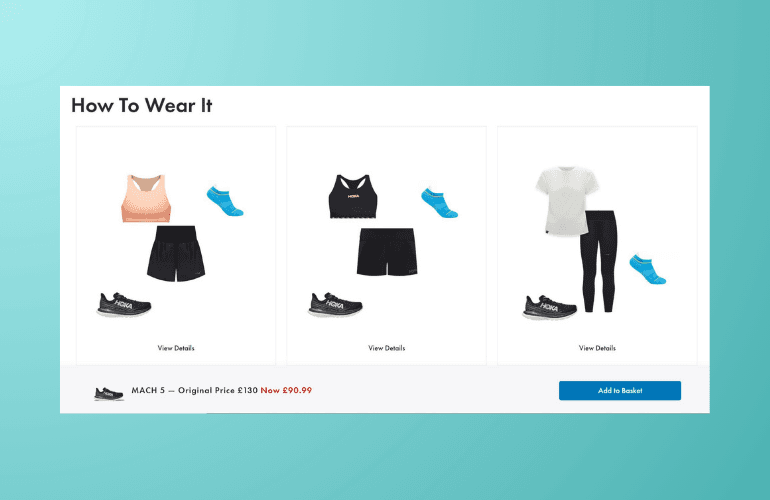
Hoka does this in a clever way on its product pages, showing customers how they can style the trainers they’re thinking of buying.
In your shopping cart
When customers add items to their shopping basket, it’s an excellent opportunity to do some cross-selling or upselling.
Chances are that customers are excited about the item they plan to purchase, so it’s the perfect time to recommend other items they may be interested in.
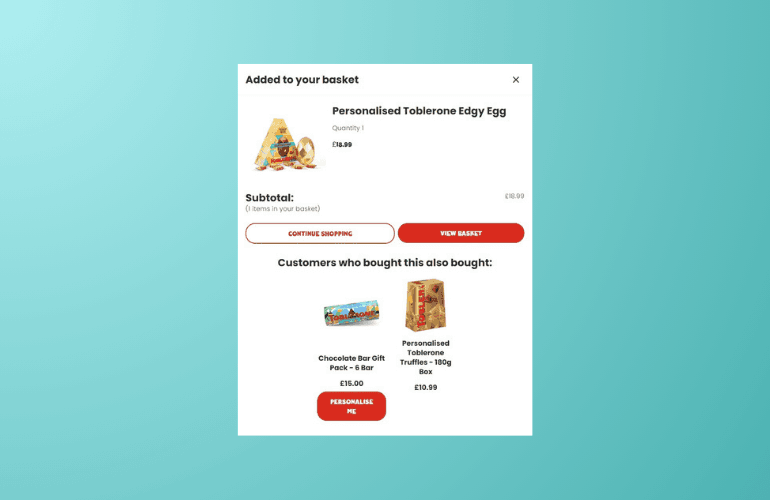
Toblerone takes the opportunity to do some cross-selling in its shopping cart, recommending items that other customers bought alongside the product in question.

Upsells work in the shopping cart too. Protein Works encourages customers to buy a larger version of the item they just added to their basket, showing them how much they can save.
At checkout
At checkout, customers have the opportunity to take stock of their planned purchases and imagine how they will add value to their lives.
A well-timed cross-sell or upsell can lead to last-minute impulse purchases.
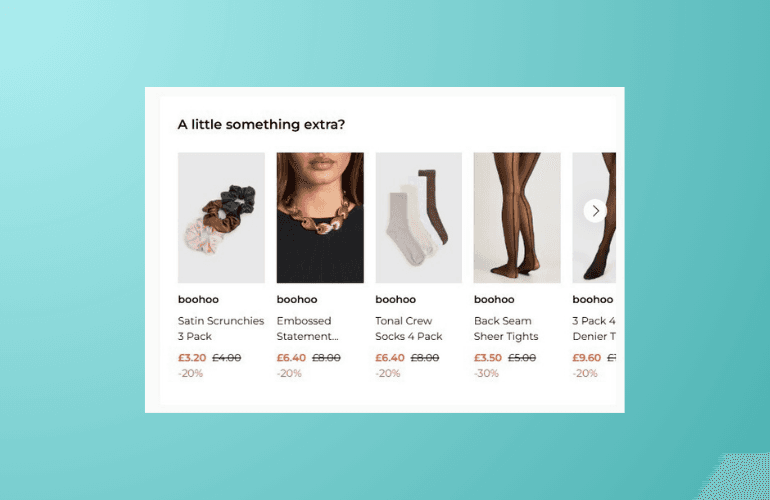
Boohoo uses its checkout to recommend accessories that will add the final flourish to the clothing items that customers are ready to buy. And bonus: they’ve been reduced in price.
Cross-selling and upselling at checkout can be a clever way to get customers to buy more.
If you have a threshold in place for free or expedited delivery, customers may want to purchase some additional products (or a larger version of the same product) in order to hit the minimum order requirement!
After checkout
You may think that the opportunity to offer an upsell or cross-sell is long-gone once customers have placed their order.
However, a post-purchase upsell or cross-sell can lead to up to 10% conversion rates. This is when you offer a deal just after a customer has finalised their order.
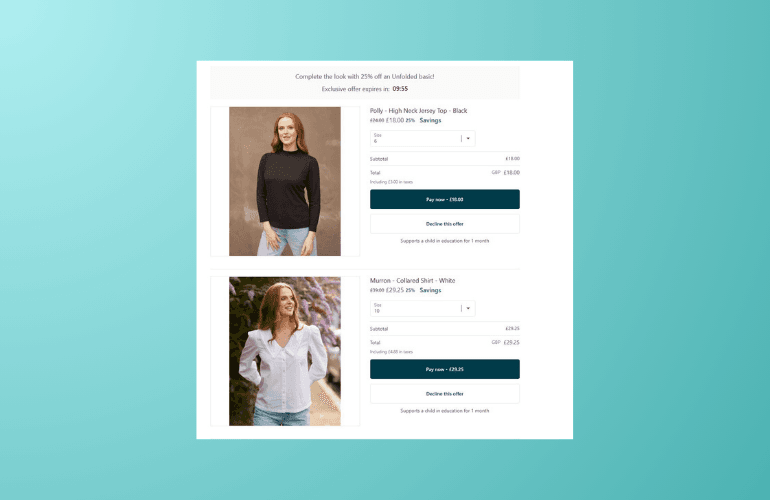
This is Unfolded does this on its website. As soon as a customer places an order, they receive two additional offers at a significantly reduced price.
As the customer has already provided their payment information, they just have to specify their size and click the Pay now button to accept the deal.
As customers have committed to a purchase and already provided their payment and delivery details, they don’t need to make too much effort. As a result, they may be more receptive to what you’re offering.
Through email
If a customer hasn’t responded to the cross-sells or upsells on your website, you have the option of selling additional products through your emails.
You can implement an automated post-purchase email flow, thanking your customer for their purchase and recommending some additional products they may be interested in.
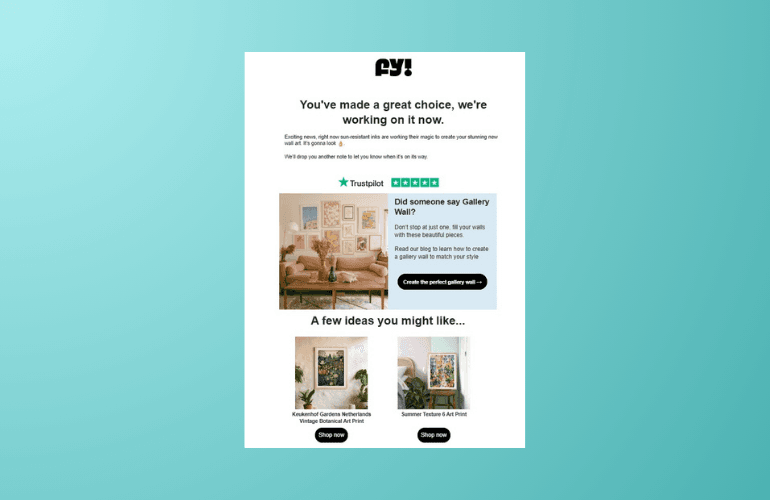
Art store Fy uses its ‘thank you’ email to not only tell customers that it’s working on their print, but to subtly promote other relevant items.
Important note: Using transactional emails (emails that tell customers about their order) to promote products can be a grey area.
If a customer has advised that they don’t want to receive marketing emails, we would recommend not using these types of emails to cross-sell your products. If they have consented to marketing emails, you’re good to go!
How to cross-sell and upsell like a pro
Cross-selling and upselling can be a brilliant way to boost sales and introduce customers to the extensive range of products you sell.
However, it’s important to do your research and understand the people who buy from your store, otherwise you may end up frustrating shoppers with deals they’re not interested in.
As an eCommerce agency, we have years of experience setting up cross-selling and upselling campaigns that get results. We’ve put together six tips to help you sell products that your customers want to put in their shopping carts!
1. Use your data to understand what your customers want
When you’re upselling or cross-selling, you want to sell something that’s of interest to your customers. Otherwise, there’s the risk they may decline your offer.
A good starting point is to offer them something that’s relevant to the product they want to purchase. For example, if they plan to buy a woolly hat, offer them the matching scarf and gloves.
If you want to take things to the next level and offer a product that your customers really want to buy, dig into your existing data. You can analyse buying patterns and determine which products are most commonly bought together.
Alternatively, you can review your customer’s purchase history and recommend products that are similar to ones they’ve bought before to offer a truly personalised shopping experience.
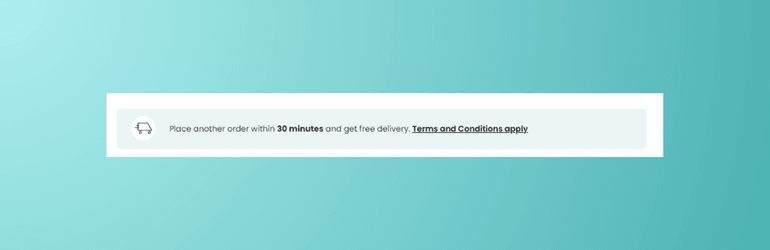
Think outside the box in regards to what you offer your customers – as well as products, you can offer services and other rewards.
Next has a savvy post-purchase upsell in place where you get free delivery if you place another order within 30 minutes!
If you regularly ask customers for feedback, it can be worth asking what would encourage them to spend more in your store.
2. Use FOMO to inspire urgency
When it comes to cross-selling and upselling, you want customers to agree to what you’re offering straightaway. This is especially true of post-purchase cross-sells and upsells, where you need customers to commit as soon as possible.
Using the fear of missing out, or FOMO, in your offer can encourage customers to move quickly to make sure they don’t miss out on a good deal.
Good ways to include FOMO in your cross-selling and upselling offers include adding a countdown timer, using persuasive language, or advising how many products are left.

Of course, if you choose to use FOMO, make sure your offer doesn’t come across as too pushy to your target audience. While some customers may appreciate the urgency of the offer that Shapermint has provided above, others may see it as too aggressive.
3. Remove the friction
If you want your shoppers to take advantage of your cross-selling and upselling deals, you need to make it as easy as possible for them to do so. If there are too many steps they need to take, they’re likely to give up.
Over a fifth of people have abandoned an online order because the checkout process was too complicated, with many more getting frustrated navigating an eCommerce store.
Ways you can increase the chances of people accepting your cross-sells and upsells include:
- Implementing guest checkout (with the option for customers to create an account after they’ve purchased)
- Making it as easy to checkout as possible – reducing unnecessary form fields and adding progress indicators
- Showing additional charges and delivery charges upfront
- Adding multiple payment options
- Improving website speed and mobile friendliness
- Allowing shoppers to purchase an offer with just one click
4. Provide customers with more information about your offer
Persuasive copy and imagery can encourage customers to buy your upsell or cross-sell, especially if your offer is more expensive. What value will customers gain by saying ‘yes’ to your deal?
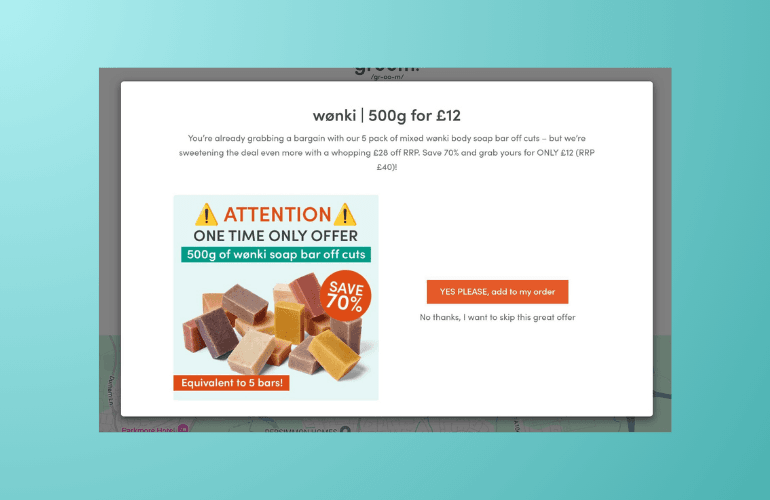
We like this post-purchase upsell from Grüum, encouraging customers to buy an additional pack of soap bars. It reminds customers of what they’ve already purchased, how much they can save, and what the offer is the equivalent of.
If you want to try different combinations of copy, images, and even call-to-action buttons to see which ones have the best take-up rate, try A/B testing.
This is when you roll out two offers, identical apart from one small difference. You can then see which one leads to the most sales.
5. Use trust signals
If people haven’t bought a specific product from your business before, they need to know that it is authentic and high-quality.
Trust signals like reviews, ratings, and awards won show shoppers that previous customers have bought and enjoyed your products, meaning they can buy your cross-sell or upsell with confidence.
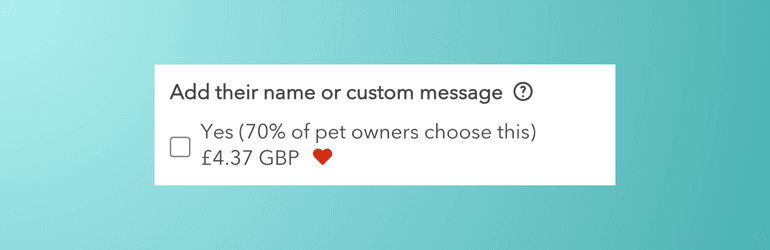
This is a great example of a checkout upsell that uses trust signals – it tells customers how many other shoppers bought the upsell!
6. Offer a downsell
What happens when a customer says no to your cross-sell or upsell?
Rather than give up, it may be worth providing a downsell. This is when you offer your customer a less expensive, less valuable version of the product they said no to. For example, instead of a product that costs £40, you offer one that costs £25.
The bonus of this is that you’ll still make a sale if the customer accepts the downsell.
Cross-selling and upselling: Frequently asked questions
Got any additional questions about cross-selling and upselling on your eCommerce store? You’ll find the answers here!
Cross-selling or upselling: Which one is right for my eCommerce business?
Cross-selling works best when you have a wide range of low-cost products on your website that complement each other.
Upselling works best when you have a premium line of products you want to sell.
If you’re not sure which strategy is the right one for your business, we recommend trying both on your website and seeing which one customers respond best to.
How can I implement cross-selling and upselling on my website?
Most eCommerce platforms, like WooCommerce and Shopify, come with cross-selling and upselling apps you can download and install.
These make it easy to add cross-selling and upselling offers to any part of your website. They use your store data and artificial intelligence to identify the offers that are most likely to make shoppers want to buy.

Most email marketing platforms come with automated workflows you can use to send upselling and cross-selling offers to customers as soon as they have bought from you.
How can I use cross-selling and upselling without frustrating users?
Some businesses are reluctant to offer cross-selling and upselling on their online stores as they worry that customers may think they’re being pushy.
Here are some ways you can implement cross-selling and upselling on your website and keep customers happy:
- Don’t ask too much: Bombarding customers with cross-selling and upselling offers can come across as needy or forceful. Review the customer journey to provide offers where shoppers will appreciate them most
- Don’t provide too many options: While offering two or three alternative products gives your customers choices, providing too many can be counterproductive as customers may experience decision paralysis
- Don’t be greedy: Don’t try to sell products that are significantly more expensive than the one your customer intends to buy. As a rule of thumb, upsells shouldn’t exceed 25% of the original product price
What is bundling?

Bundling (or bundle pricing) is a specific type of cross-selling, where instead of selling one complementary product, you’re selling multiple complementary products, often at a significant discount.
Bundling works well when products are naturally used together, or you want to shift low-selling products by pairing them with popular items.
How can I measure the success of my cross-selling and upselling efforts?
Monitoring your cross-selling and upselling deals means you know which product combinations customers respond most positively to, and means you can quickly identify any potential issues.
Here are the best metrics to measure:
- Average order value (AOV): This measures how much each customer spends with you every time they place an order. By comparing the AOV of customers who accept a cross-sell or upsell against those who don’t, you can see if they’re driving success
- Customer lifetime value (CLV): As cross-selling and upselling can increase customer loyalty, CLV can help you see if your efforts are leading to long-term relationships with shoppers
- Upsell/cross-sell conversion rate: You can use this metric to see what percentage of shoppers accept a cross-sell or upsell when they’re shown it. A conversion rate above 20% is excellent; a conversion rate below 10% may mean you need to review your offer
- Cart abandonment rate: This measures how many customers place an order in their basket but don’t make a purchase. If this increases after you’ve implemented cross-sells and upsells on your site, it may be a sign that they’re causing friction in your store
Xigen: Your upselling and cross-selling specialists
Cross-selling and upselling don’t just increase sales on your website, but can help customers find the products that are perfect for them. A win-win for everyone!
If you want to implement cross-selling and upselling on your eCommerce website but don’t know where to start, we can help.
As an eCommerce agency with over two decades of experience, we’ll get you started with the right software, optimise your product pages for sales, and streamline your checkout to minimise friction. Get in touch today, and take the first step towards increasing sales on your website.


 Back
Back
