
SMS marketing: how to use it to grow your business

Article topics
- What is SMS messaging?
- What are the benefits of SMS marketing?
- What can you use SMS marketing for?
- How much does it cost to send text messages?
- Can I send SMS marketing messages to anyone?
- How do I encourage people to sign up for my SMS marketing list?
- How do I start sending SMS messages?
- Top tips for sending SMS marketing messages that stand out
- Are there any alternatives to SMS messaging?
You’ve got an active social media following, have ads running in Google Search, and have built a highly targeted and segmented email marketing list.
But what other channels can you use to market your business?
SMS marketing is a fantastic way to send short, powerful messages to customers when they’re on the move. And the great thing is, it’s not as hard to get started as you might think.
In this article we’ll show you what you can use SMS marketing for, how to build your marketing list in line with UK regulations, and share top tips for writing the perfect text.
What is SMS messaging?

Short message service (SMS) marketing is when you send text messages to customers to promote your products or services.
What are the benefits of SMS marketing?
SMS marketing is a popular marketing channel, with 80% of businesses using it to communicate with customers.
But why do businesses use text messaging?
- It’s quick. Four out of five people check their notifications within five minutes of receiving a text, making SMS marketing ideal if you want to get a message out as soon as possible or promote something time-sensitive
- People pay attention to texts. When people get multiple email messages a day and see walls of social media posts, a text can make you stand out above the noise. The average open rate for SMS messages is 98%, compared to 28% for emails
- It’s personalised. Like email marketing, SMS marketing lets you send highly targeted and segmented messages, increasing the chances of clicks and conversions
- It provides an opportunity for two-way communication. Text messaging is ideal if you want customers to directly respond to you, provide feedback, or review your products and services
- Customers don’t need to be on a WiFi or mobile internet connection. This lets you keep in contact if they can’t connect to WiFi or if they’ve used up all their mobile data
What can you use SMS marketing for?
You can split SMS marketing into two broad types – transactional and promotional.
Transactional messages relate to an order a customer has placed. So you might send a customer messages to say their order has been dispatched, their order is with a courier, and when they can expect their order to be delivered.
You can also use them to get feedback about your products and services and send appointment reminders.

Conversely, you can use promotional messages to advertise your business and promote your products and services.
For example, you can use them to let customers know about an upcoming flash sale or a new range of products. You can also send discount codes and exclusive offers.

How much does it cost to send text messages?
It depends on a number of factors:
- The provider you choose. Some providers offer a set amount of credits a month, while others offer pay-as-you-go pricing. We’ll look at providers in more detail later
- The number of messages you send. Generally the more texts you buy, the cheaper each text becomes
- Whether you send texts internationally
- If you want any additional features like automation and message scheduling
As a rule of thumb, you can expect to pay between 2p and 5p per text you send.
Can I send SMS marketing messages to anyone?
It depends on the context of the message.
If a customer provides their mobile number at checkout, you can send them transactional messages about their order. So, for example, you can message them to say their order has left the warehouse and tell them when they can expect delivery.
However, you need their explicit permission to send promotional SMS messages. Otherwise you could be in breach of regulations like GDPR.
The best ways to get explicit permission from customers are to ask them to:
- Text a short code (a 5 to 6-digit phone number) to sign up to your mailing list
- Tick a box or click a button after entering their mobile number to confirm they are happy to receive marketing messages

It’s important to bear in mind that email marketing and SMS marketing are two separate and distinct marketing channels. You can’t send someone text messages because they’ve opted in to receive emails, and vice versa.
Here are some other things to bear in mind when marketing to people by SMS:
- Use a double-opt-in to make sure customers genuinely want to receive text messages
- Give people an option to unsubscribe – either by clicking a link in the text or replying with a keyword like ‘STOP’
- Mention how you will use people’s phone numbers and how you will store their data in your privacy policy – link to this when asking people to sign up
- You must clearly share your identity so customers know who you are – either in the sender ID or at the beginning of the message you send
- Consider the times of day you will send SMS messages – we’ll talk about this in more detail later
If you sell to other countries, you also need to be mindful of their SMS messaging regulations, as these could be different to the UK.
For example, some countries (like Australia) advise that customers should be able to text HELP to get information about the business or to speak to customer support.
How do I encourage people to sign up for my SMS marketing list?
The good news is that many people are willing to sign up for SMS messages – 79% opted to receive texts from businesses in 2024.
It’s okay to offer something of value in exchange for a mobile number – 56% of people say they will sign up in exchange for a discount.
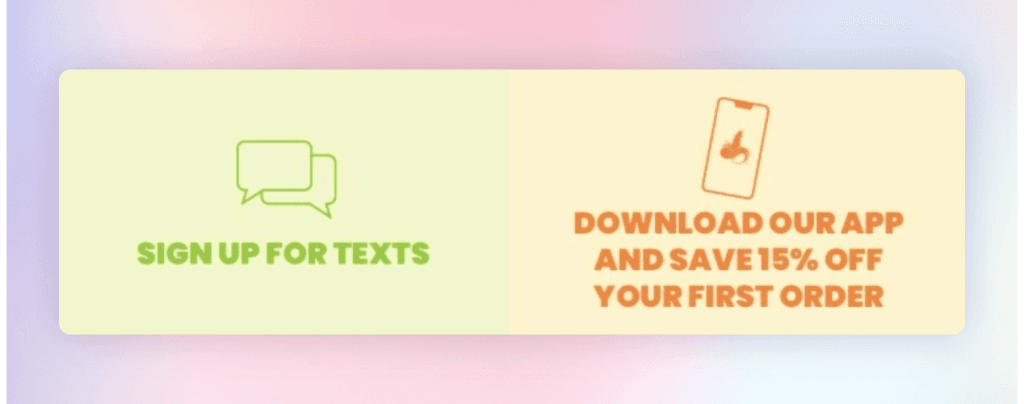
Use your existing marketing channels to encourage customers to sign up, for example, through your social media posts, blog articles, or email newsletters.
How do I start sending SMS messages?
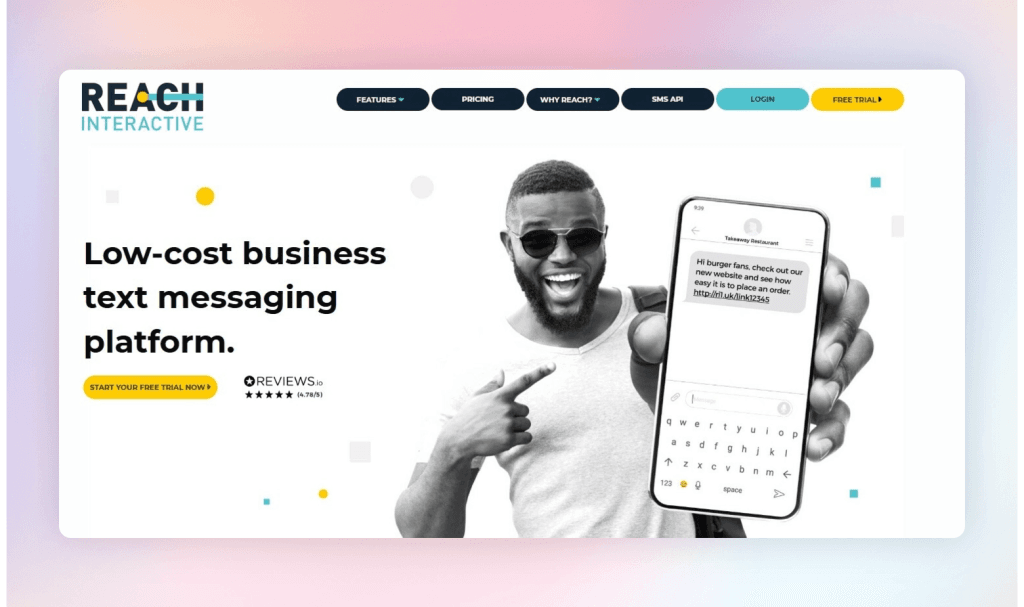
When you need to manage an SMS mailing list, you need the ability to send messages in bulk and see who is reading your messages.
Signing up to a text marketing provider is the best way to do this. Most providers let you buy credits, which provide you with access to a platform where you can upload numbers, schedule messages, and save commonly-used templates.
Some of the more advanced platforms let you segment your mailing list, use A/B testing, and integrate your list with other platforms. For example, you can connect your email and SMS marketing platforms to get optimal insight about your customers.
Top tips for sending SMS marketing messages that stand out
It’s not just a case of typing out a text, crossing your fingers, and hoping that customers act on it. Like all other marketing channels, you need to think carefully about the messages you send.
Here are our top tips for writing SMS messages people want to engage with.
Keep your texts short
The character limit for texts is 160 characters – this includes not only words but spaces, numbers, and special characters. If you use more than 160 characters, your message will be sent across multiple texts, which can mean it costs more.
Texts are meant for short, sharp bursts of information. If you want to send something longer, consider sending an email instead.
While brevity is important, avoid using text speak to reduce your character count, like ‘4’ instead of ‘for’. This can make your message look spammy, increasing the risk of recipients reporting it as a scam.
Include a link
Adding a link to your SMS message is a savvy move.
Not only can you provide recipients with more information and a clear call to action, but you can track how many people click on the link. This lets you see how successful your SMS campaigns are.
According to Falkon SMS, 29% of SMS recipients click on links in messages, with 47% of those clicks leading to a sale.
Bear in mind that including a link will eat into your character count. Using a URL shortener like Bitly can help.
Combine with the rest of your marketing campaigns
You should never send text messages as an afterthought. You’ll get the most out of them when you use them alongside the rest of your marketing channels to achieve unified goals.
For example, let’s say you want to promote your latest product line. You can publicise it through your blog, social media, and email marketing list, and send a SMS message with a discount code as a final sweetener.
The easiest way to ensure all your marketing channels are aligned is through a content calendar. This helps you plan ahead and make sure all your marketing messages are consistent.
Think about your cadence
Like emails, there will be an optimal day and time to send an SMS message. Consider your target audience and carry out A/B testing to identify that all-important sweet spot.
Another thing to bear in mind with SMS messages – many countries have ‘quiet hours’ where making sales calls and sending promotional text messages are prohibited.
For example, you’re not allowed to send texts to customers between 8pm and 9am in the UK. Some countries also don’t let you send messages on weekends and bank holidays.
MailChimp has a list of quiet hours by country on its website.
As well as day and time, you need to think about how often you send text messages. Send too many, and you may frustrate customers, but don’t send enough, and customers may forget who you are.
According to SimpleTexting, 48% of people are happy to receive a promotional text once a fortnight.
Are there any alternatives to SMS messaging?
88% of UK shoppers say they have signed up for (or are interested in signing up for) texts from a brand.
However, new alternatives to SMS messaging are also available if you’re looking for different ways to market to customers.
MMS marketing
Multimedia message service (MMS) marketing is similar to SMS marketing. However, this format allows you to send images, videos, and gifs alongside your text message.
MMS marketing means you can send more engaging messages to customers. It also increases your character count to 1,600 characters – ten times more than a standard SMS.
However as more data is involved, MMS messages are more expensive.
RCS marketing
Rich communication service (RCS) marketing uses mobile data and WiFi to enhance the messaging experience.
RCS supports videos, audio, and offers additional functionality like read receipts and verified sender profiles to boost trust.
However, as RCS uses data rather than the cellular network, these messages require an internet connection. Plus, not all mobiles support it, and not everyone has it enabled.
Social messaging apps

Social messaging apps (like WhatsApp) allow you to communicate with customers over mobile data and WiFi. Another advantage is that they are great for group chat and building a community around your brand.
For example, you can use them to send messages to customers en masse, ask for their feedback, and encourage them to engage with each other.
While this is a good way to encourage engagement, it can be time-consuming as you need to manage and moderate an entire community.
Ready to send SMS messages that get people’s fingers tapping?
If you’ve never sent an SMS message on behalf of your business before, it can seem daunting – probably because it feels so personal and direct.
However, SMS marketing is a fantastic way to get people’s attention and get them excited about your brand. Just remember to get your customers’ explicit permission and plan your campaigns, and you’ll be fine!
Let us leave you with one final tip. Don’t forget to review your SMS campaigns regularly – this helps you see what’s working well and shows what you can do to optimise your messages.
Need help getting your site set up for SMS marketing? Get in touch, and we’ll help you deliver seamless marketing campaigns your customers love.


 Back
Back
